













Coffee, chocolate and cream in a small glass: the story of the Bicerin, Turin's historic coffee houses and the city...
-
- I PIÙ VENDUTI MACINATI
- I PIÙ VENDUTI GRANI
-
- I più venduti i grani

- I più venduti macinati
-
- I più venduti i grani
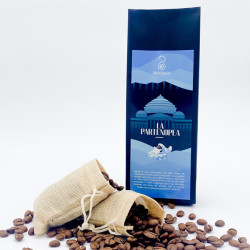 La Partenopea€7.00
- I più venduti macinati
 La Partenopea€7.00
-
Search in blog
Blog categories
Latest posts
The Bicerin and the Historic Coffee Houses of Turin
Read more
Water Is 90% of Your Espresso: Do You Know What You Are Serving? Read more
Hardness, limescale, chlorine and minerals: how water changes the taste of espresso and the life of the machine, and...
Mistakes That Ruin Café Espresso (Even With an Excellent Blend) Read more
Grinder, dose, cleaning, water and service pace: the most common mistakes that ruin café espresso and how to fix them...
Freshly Roasted Coffee: How Many Days Until It Is Ready? Read more
Freshly roasted coffee is not at its best straight away. What resting is, how many days to wait for moka, espresso...
Light, Medium or Dark Roast: What Changes in the Coffee? Read more
Acidity, sweetness, bitterness, body and caffeine: what happens to the bean during roasting and which roast to choose...
Featured posts

Swiss Water, CO₂ or Dichloromethane Decaf: What Changes?
How is caffeine removed from coffee? Water, CO₂ and solvents compared: how they work, what remains in the bean and...
Read more
How to Make Moka Pot Coffee: The Complete Guide
Dose, grind size, water and heat: everything you need for a sweet, aromatic moka pot coffee that never tastes burnt...
Read more
Whole Bean or Ground Coffee: Which Is Better to Buy?
Whole bean or ground? Pros and cons, how long the aroma lasts, when a grinder is worth it and how to choose the right...
Read more
What Is Specialty Coffee and Why Choose It?
Origins, quality, traceability and flavour: discover what specialty coffee means and how to choose your first coffee...
Read more
The Bicerin and the Historic Coffee Houses of Turin
If any Italian city has a special bond with coffee, it is Turin. The first espresso machine was born here, some of Italy's most beautiful historic coffee houses are here, and for more than two and a half centuries people here have been drinking something you will not find anywhere else: the Bicerin.
And here, in Turin, we roast Tresessanta coffees too.
What the Bicerin is
The Bicerin, Piedmontese for "little glass", is a hot drink served in a small glass in three layers that do not mix:
- at the bottom, thick hot chocolate;
- in the middle, strong coffee;
- on top, milk cream.
It is drunk as it is, without stirring, so you taste the three flavours one after another: fresh cream, bitter coffee, sweet chocolate.
From bavareisa to Bicerin
In eighteenth-century Turin people drank bavareisa, a drink served in large glasses made of coffee, chocolate, milk and syrup stirred together. Over time it became customary to serve the three ingredients separately, in layers, in a smaller glass. The Bicerin was born.
The place most closely tied to the Bicerin is Caffè Al Bicerin in Piazza della Consolata, opened in 1763 and still one of the city's landmarks. It is said to have been frequented by illustrious nineteenth-century figures, including politicians, writers and travellers. It was also one of the few drinks allowed on fasting days, because hot chocolate was not considered food.
Turin, city of historic coffee houses
Between the eighteenth and twentieth centuries Turin filled with elegant cafés, with mirrors, inlaid wood, marble and velvet. They were meeting places for nobles, intellectuals, artists and politicians, and many lived through the Risorgimento. Some of the best known:
- Caffè Al Bicerin (1763), in Piazza della Consolata, home of the drink of the same name.
- Caffè Fiorio (1780), on Via Po, frequented by nineteenth-century aristocrats and politicians.
- Caffè San Carlo (1822), in the square of the same name, among the first in Turin to have gas lighting.
- Baratti & Milano (1858), under the arcades of Piazza Castello, at the entrance to Galleria Subalpina.
- Caffè Mulassano (1907), in Piazza Castello, small and refined, traditionally linked to the invention of the tramezzino sandwich.
Spending an afternoon among these cafés is one of the best ways to get to know the city.
Where the espresso machine was born
In 1884 Turin's Angelo Moriondo patented a machine for making coffee quickly with water and steam, presented at the General Italian Exhibition in Turin. It is considered the ancestor of espresso machines. A few decades later, also in Piedmont, the moka pot was born. We tell that story in our article on the history of the moka pot.
How to make a Bicerin at home
It will not be quite the same as in Piazza della Consolata, but a homemade Bicerin is a small winter pleasure. For two glasses:
- Chocolate: 40 g dark chocolate, 100 ml milk, 1 teaspoon sugar, 1 teaspoon unsweetened cocoa. Heat the milk, add chocolate, cocoa and sugar and stir until thick.
- Coffee: two espressos or a strong two-cup moka pot.
- Cream: 80 ml fresh cream, lightly whipped, still soft and pourable.
Pour the hot chocolate into the bottom of two small glasses, gently add the coffee by pouring it over the back of a teaspoon, and finish with the cream. Serve at once, without stirring.
The coffee needs a bold, round flavour that stands up to the chocolate: try the La Serenissima blend ground for espresso or for moka. If you prefer a single origin, a sweet Brazilian such as Brazil Vila Boa pairs well with chocolate. For the perfect moka, read our moka pot guide.
Frequently asked questions
Should you stir a Bicerin?
No. The beauty of the Bicerin is tasting the three layers separately, one after another.
What is the difference between a Bicerin and a marocchino?
A marocchino is coffee with cocoa and milk foam, served in a small glass. The Bicerin uses thick hot chocolate and milk cream in distinct layers, and its history is tied to Turin.
Can you make a Bicerin with a moka pot?
Yes. You just need strong moka coffee, brewed over low heat so it does not turn bitter.
When do people drink Bicerin?
Traditionally in the morning or afternoon, especially in the colder months.
In short
The Bicerin is coffee, chocolate and cream in a small glass, and the symbol of Turin's long love affair with coffee: a city of historic coffee houses, birthplace of the espresso machine, where coffee is still roasted with passion today.
Posted in: Coffee Stories and Curiosities