















Coffee, chocolate and cream in a small glass: the story of the Bicerin, Turin's historic coffee houses and the city...

-
- I PIÙ VENDUTI MACINATI
- I PIÙ VENDUTI GRANI
-
- I più venduti i grani

- I più venduti macinati
-
- I più venduti i grani
 La Partenopea€7.00
- I più venduti macinati
 La Partenopea€7.00
-
Search in blog
Blog categories
Latest posts
The Bicerin and the Historic Coffee Houses of Turin
Read more

Water Is 90% of Your Espresso: Do You Know What You Are Serving? Read more
Hardness, limescale, chlorine and minerals: how water changes the taste of espresso and the life of the machine, and...
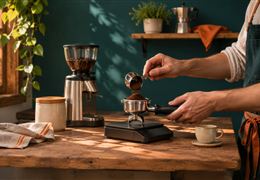
Mistakes That Ruin Café Espresso (Even With an Excellent Blend) Read more
Grinder, dose, cleaning, water and service pace: the most common mistakes that ruin café espresso and how to fix them...

Freshly Roasted Coffee: How Many Days Until It Is Ready? Read more
Freshly roasted coffee is not at its best straight away. What resting is, how many days to wait for moka, espresso...
Light, Medium or Dark Roast: What Changes in the Coffee? Read more
Acidity, sweetness, bitterness, body and caffeine: what happens to the bean during roasting and which roast to choose...
Featured posts

Swiss Water, CO₂ or Dichloromethane Decaf: What Changes?
How is caffeine removed from coffee? Water, CO₂ and solvents compared: how they work, what remains in the bean and...
Read more
How to Make Moka Pot Coffee: The Complete Guide
Dose, grind size, water and heat: everything you need for a sweet, aromatic moka pot coffee that never tastes burnt...
Read more
Whole Bean or Ground Coffee: Which Is Better to Buy?
Whole bean or ground? Pros and cons, how long the aroma lasts, when a grinder is worth it and how to choose the right...
Read more
What Is Specialty Coffee and Why Choose It?
Origins, quality, traceability and flavour: discover what specialty coffee means and how to choose your first coffee...
Read more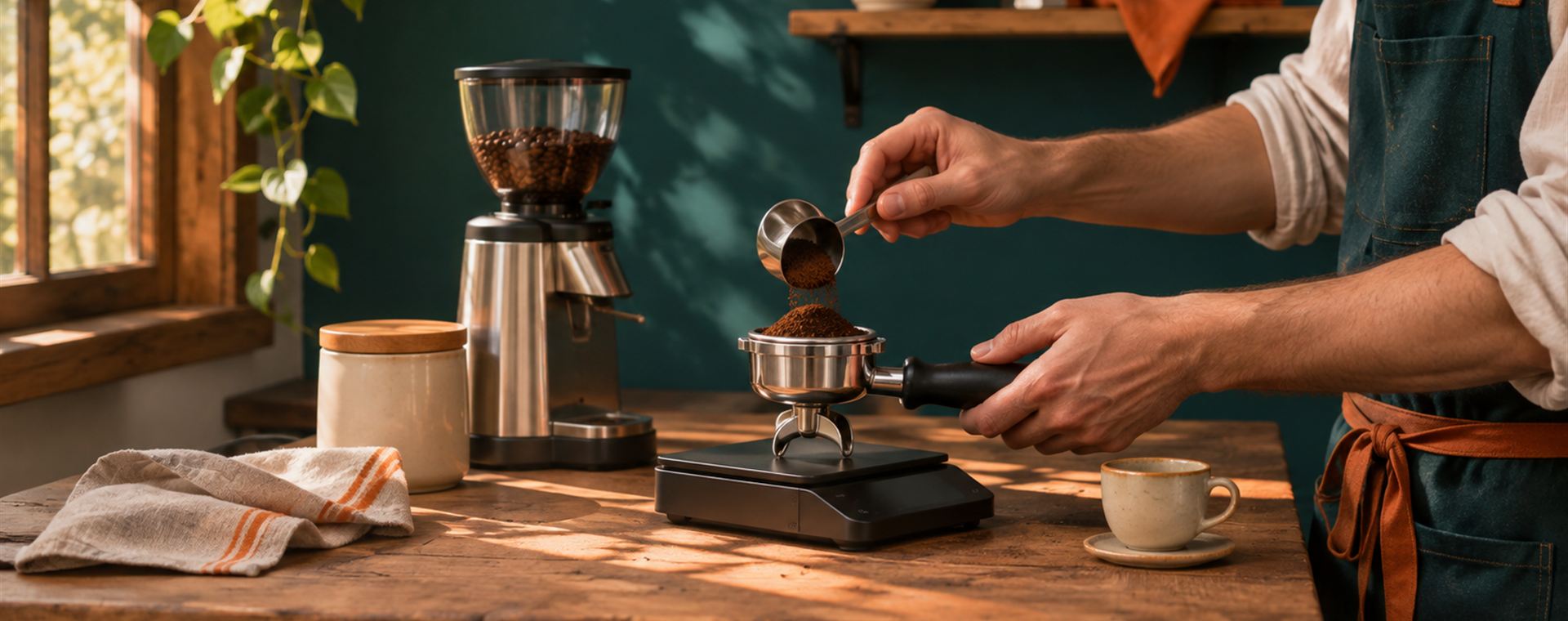
Mistakes That Ruin Café Espresso (Even With an Excellent Blend)
A café can buy excellent coffee and still serve a mediocre espresso. It happens more often than you might think, and the blend is almost never to blame. Between the coffee bag and the cup there is the machine, the grinder, the water and the hands of the barista. Here are the most common mistakes and how to avoid them.
1. Adjusting the grinder only once
Grind size should be checked several times a day. Temperature, humidity, coffee freshness and service intensity change how the grounds behave: the perfect setting at 8 am may no longer be right at 11.
What to do: check extraction time at opening and whenever the weather or pace changes. As a reference, a single espresso extracts in about 25 seconds; if it runs too fast, grind finer; if it drips, grind coarser.
2. Not weighing the dose
Dosing "by eye", or relying on a doser calibrated once, can vary by a couple of grams. In espresso those are huge differences.
What to do: regularly check the weight of the dose and of the espresso in the cup with a precision scale. A few checks a day are enough to keep the recipe consistent.
3. Grinding in advance
Ground coffee loses aroma within minutes. Hoppers full of grounds sitting for a long time and full dosers are enemies of quality.
What to do: grind on demand, or keep in the doser only what you will use within a few minutes at peak times.
4. Neglecting machine cleaning
Coffee oils build up on shower screens, gaskets and portafilters. Within hours they turn rancid and reach the cup as bitter, stale notes.
What to do:
- flush water through the group before each shot to clean the shower screen and stabilise temperature;
- wipe and clean the portafilter after every coffee;
- backflush the groups with a dedicated detergent at the end of the day, following the machine manufacturer's instructions;
- remove and clean shower screens and baskets every week.
5. Leaving the portafilter out of the group
A cold portafilter lowers extraction temperature and makes the espresso sour.
What to do: always keep portafilters locked into the group when not in use.
6. Uneven tamping
A tilted or uneven tamp creates channels: water flows where resistance is lowest and the coffee ends up bitter and watery at the same time.
What to do: distribute the grounds evenly and tamp level, always with the same pressure.
7. Ignoring the water
Water makes up most of an espresso. Limescale, chlorine or an overly mineral taste come through in the cup and, over time, damage the machine.
What to do: use a suitable filtration system and have it checked regularly. We cover this in detail in our article on water for espresso.
8. Serving in cold cups
A cold cup cools the espresso immediately and dulls its aromas.
What to do: keep cups on the machine's cup warmer.
9. Neglected milk jug and steam wand
Burnt milk or milk left in the wand ruins cappuccinos and macchiatos, and creates hygiene problems.
What to do: purge and wipe the steam wand after every use, use cold milk and a clean jug.
10. Not tasting
The simplest and most common mistake: serving dozens of coffees a day without tasting them.
What to do: taste at least one espresso at opening and one after every adjustment. It is the cheapest quality control there is.
Frequently asked questions
How often should a café grinder be adjusted?
At least at opening and whenever the service pace or weather changes. In busy cafés, a mid-morning and an afternoon check are good habits.
How much should an espresso weigh in the cup?
It depends on the café's recipe. As a reference, many cafés work with a ratio of about 1:2 between ground coffee and coffee in the cup, for example 8 g of grounds for about 16–20 g of espresso.
How often should the machine be serviced?
Group cleaning should be done daily; technical servicing, checking gaskets, boiler and water filters, according to the technician's plan, usually several times a year in high-volume venues.
Can a good blend make up for a neglected machine?
No. A dirty machine or a badly set grinder ruins even the best coffee. The reverse is also true: a well-kept machine brings out the blend.
How should staff be trained on espresso quality?
With a few written rules that apply to everyone: dose, time, cleaning. A shared tasting at the start of each shift helps keep the same standard.
A good blend deserves service to match
Café coffee quality depends on many details the customer does not see but tastes in the cup. A few daily habits make the difference and give customers one more reason to come back.
L.A. Torrefazione Insieme, the Turin roastery behind Tresessanta, supplies coffee to cafés, offices and restaurants. If you run a café and would like to try our blends, such as La Serenissima, write to us at [email protected].
Posted in: Coffee for Cafés: Technique and Quality
Related posts
 Coffee Grind Size: Which One for Moka, Espresso and Filter
Fine, medium or coarse? The right grind for each brewing method, how to recognise it by touch and why it changes the...
Read more Water Is 90% of Your Espresso: Do You Know What You Are Serving?Hardness, limescale, chlorine and minerals: how water changes the taste of espresso and the life of the machine, and...
Read more