














Coffee, chocolate and cream in a small glass: the story of the Bicerin, Turin's historic coffee houses and the city...
-
- I PIÙ VENDUTI MACINATI
- I PIÙ VENDUTI GRANI
-
- I più venduti i grani

- I più venduti macinati
-
- I più venduti i grani
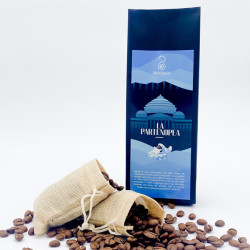 La Partenopea€7.00
- I più venduti macinati
 La Partenopea€7.00
-
Search in blog
Blog categories
Latest posts
The Bicerin and the Historic Coffee Houses of Turin
Read more
Water Is 90% of Your Espresso: Do You Know What You Are Serving? Read more
Hardness, limescale, chlorine and minerals: how water changes the taste of espresso and the life of the machine, and...
Mistakes That Ruin Café Espresso (Even With an Excellent Blend) Read more
Grinder, dose, cleaning, water and service pace: the most common mistakes that ruin café espresso and how to fix them...
Freshly Roasted Coffee: How Many Days Until It Is Ready? Read more
Freshly roasted coffee is not at its best straight away. What resting is, how many days to wait for moka, espresso...
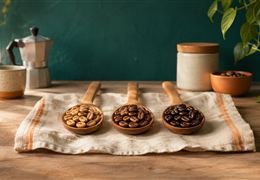
Light, Medium or Dark Roast: What Changes in the Coffee? Read more
Acidity, sweetness, bitterness, body and caffeine: what happens to the bean during roasting and which roast to choose...
Featured posts

Swiss Water, CO₂ or Dichloromethane Decaf: What Changes?
How is caffeine removed from coffee? Water, CO₂ and solvents compared: how they work, what remains in the bean and...
Read more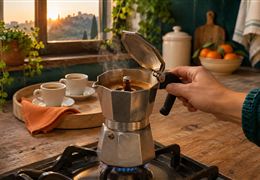
How to Make Moka Pot Coffee: The Complete Guide
Dose, grind size, water and heat: everything you need for a sweet, aromatic moka pot coffee that never tastes burnt...
Read more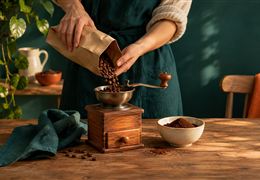
Whole Bean or Ground Coffee: Which Is Better to Buy?
Whole bean or ground? Pros and cons, how long the aroma lasts, when a grinder is worth it and how to choose the right...
Read more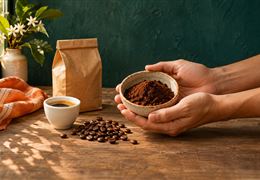
What Is Specialty Coffee and Why Choose It?
Origins, quality, traceability and flavour: discover what specialty coffee means and how to choose your first coffee...
Read more
Coffee Too Bitter or Too Sour? Causes and Fixes
One sip and something is off. The coffee is too bitter, or it stings the tongue with an unpleasant sourness. Sometimes it is both. Before changing coffee, it is worth understanding what happened during brewing: the problem is almost always there, and small adjustments fix it.
The principle: under- or over-extraction
Brewing coffee means dissolving part of the ground coffee into water. Not everything dissolves at the same speed.
- Acids and fruity notes come out first.
- Then come sugars and sweetness.
- The most bitter and astringent compounds come last.
If extraction stops too early, the cup is dominated by acids: the coffee tastes sour, thin, almost salty. This is under-extraction. If it goes too far, the bitter compounds arrive too: the coffee is bitter, dry and astringent. This is over-extraction.
Good coffee sits in between: pleasant acidity, sweetness, and a light, clean bitterness.
How to recognise the two faults
| In the cup | Likely cause | What to try |
|---|---|---|
| Sour, sharp, watery | Under-extraction | Finer grind, more coffee, hotter water, longer time |
| Bitter, dry, rough mouthfeel | Over-extraction | Coarser grind, lower heat, shorter time |
| Burnt, smoky | Too much heat or a very dark roast | Lower heat, take it off sooner, try a lighter roast |
| Flat, no aroma | Stale or poorly stored coffee | Fresher coffee, airtight storage |
Moka pot: the usual causes
If it is bitter or burnt:
- the heat is too high and the coffee rushes out;
- the pot stays on the stove until the gurgling ends;
- the coffee in the basket was tamped;
- the grind is too fine, like espresso.
If it is sour or watery:
- the basket is not filled to the rim;
- the grind is too coarse;
- there is too much water above the valve, or the gasket does not seal.
For the moka pot the most effective fix is almost always the same: low heat, and off the stove at the first gurgle. You will find every step in our moka pot guide.
Espresso: the usual causes
As a reference, a classic espresso uses about 7–9 g of coffee for a single and 16–20 g for a double, with a 25–30 second extraction.
- Runs too fast (under 20 seconds) and tastes sour: grind finer or use a slightly higher dose.
- Drips slowly (over 35 seconds) and tastes bitter: grind coarser.
- Very pale crema and a watery cup: often stale coffee or a grind that is too coarse.
- Dark, mottled crema and a burnt taste: grind too fine or the machine too hot.
Change one thing at a time and take notes. A scale with a timer makes everything much easier.
Filter and V60
In filter brewing, total time matters a lot. If the coffee is sour and the water drains too fast, grind finer. If it is bitter and water pools in the cone, grind coarser. The recommended water temperature is around 92–96 °C: water that is too cool leads to a thin, sour cup.
When brewing is not to blame
Sometimes the problem is the coffee itself:
- Stale coffee. Weeks after opening it loses aroma and sweetness, leaving mostly bitterness. Read how to store coffee.
- Very dark roast. Dark roasts are naturally more bitter. If you want more sweetness, try a medium roast.
- Intended acidity. Some coffees, like many washed Ethiopians, have a bright, fruity acidity: it is not a fault, it is their character. The difference from bad acidity? Good acidity is juicy and pleasant; bad acidity is sharp and leaves the mouth empty.
Where to start
If you prefer a classic taste, try an arabica blend such as La Serenissima. If you want to discover a pleasant, fruity acidity, try a coffee like Ethiopia Nensebo Washed and compare: you will learn to tell good acidity from bad.
Frequently asked questions
Does sugar fix bitter coffee?
It masks bitterness but does not fix it. If the coffee is bitter from over-extraction, the solution is to change grind, heat or time. Many people find that a well-extracted coffee no longer needs sugar.
Why is the same coffee good one day and not the next?
Something often changes without you noticing: the amount of coffee, the heat, the freshness of an opened bag. Repeating the same steps, perhaps weighing the dose, helps a lot.
Is acidic coffee bad for the stomach?
The acidity you taste is a flavour characteristic, mainly linked to the coffee's organic acids. Anyone with stomach issues should ask their doctor; in terms of taste, a well-extracted coffee is more balanced.
How long should an espresso take?
As a reference, about 25–30 seconds to obtain 25–35 ml in the cup from a single dose. It is a starting point, to adapt to the coffee and your taste.
Can tap water make coffee bitter?
Very hard or heavily chlorinated water can make coffee flat or add unpleasant notes. If your tap water has a strong taste, try a low-mineral bottled water and compare.
In short
Sour means under-extraction: grind finer or extend the time. Bitter means over-extraction: grind coarser, lower the heat, shorten. Change one variable at a time and taste: in two or three attempts you will find your setting.
Posted in: Coffee Brewing Guides
Related posts
 How to Make Moka Pot Coffee: The Complete Guide
Dose, grind size, water and heat: everything you need for a sweet, aromatic moka pot coffee that never tastes burnt...
Read more Coffee Grind Size: Which One for Moka, Espresso and FilterFine, medium or coarse? The right grind for each brewing method, how to recognise it by touch and why it changes the...
Read more How to Store Coffee and Keep Its AromaJar, fridge or freezer? Where and how to store whole bean and ground coffee, and how long it really stays good after...
Read more