














Coffee, chocolate and cream in a small glass: the story of the Bicerin, Turin's historic coffee houses and the city...

-
- I PIÙ VENDUTI MACINATI
- I PIÙ VENDUTI GRANI
-
- I più venduti i grani

- I più venduti macinati
-
- I più venduti i grani
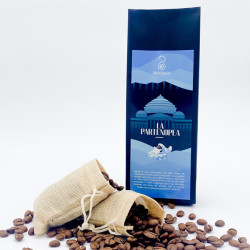 La Partenopea€7.00
- I più venduti macinati
 La Partenopea€7.00
-
Search in blog
Blog categories
Latest posts
The Bicerin and the Historic Coffee Houses of Turin
Read more
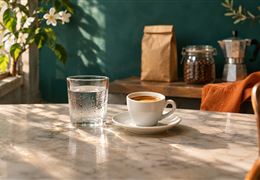
Water Is 90% of Your Espresso: Do You Know What You Are Serving? Read more
Hardness, limescale, chlorine and minerals: how water changes the taste of espresso and the life of the machine, and...
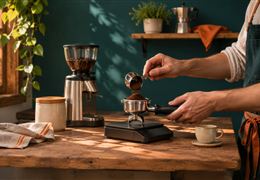
Mistakes That Ruin Café Espresso (Even With an Excellent Blend) Read more
Grinder, dose, cleaning, water and service pace: the most common mistakes that ruin café espresso and how to fix them...

Freshly Roasted Coffee: How Many Days Until It Is Ready? Read more
Freshly roasted coffee is not at its best straight away. What resting is, how many days to wait for moka, espresso...
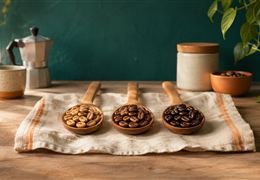
Light, Medium or Dark Roast: What Changes in the Coffee? Read more
Acidity, sweetness, bitterness, body and caffeine: what happens to the bean during roasting and which roast to choose...
Featured posts

Swiss Water, CO₂ or Dichloromethane Decaf: What Changes?
How is caffeine removed from coffee? Water, CO₂ and solvents compared: how they work, what remains in the bean and...
Read more
How to Make Moka Pot Coffee: The Complete Guide
Dose, grind size, water and heat: everything you need for a sweet, aromatic moka pot coffee that never tastes burnt...
Read more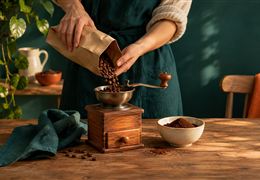
Whole Bean or Ground Coffee: Which Is Better to Buy?
Whole bean or ground? Pros and cons, how long the aroma lasts, when a grinder is worth it and how to choose the right...
Read more
What Is Specialty Coffee and Why Choose It?
Origins, quality, traceability and flavour: discover what specialty coffee means and how to choose your first coffee...
Read more
Water Is 90% of Your Espresso: Do You Know What You Are Serving?
There is plenty of talk about blends, grinders and machines. Much less about the main ingredient: water. Yet water makes up about 90% of an espresso. If the water is not right, no coffee can perform at its best.
What water does in espresso
Water is not just a medium passing through the coffee: it is the solvent that extracts aromas, sugars and acidity. Dissolved minerals, especially calcium and magnesium, help extract aromatic compounds. Bicarbonate regulates acidity: a little softens it, too much flattens it.
That is why two cafés using the same coffee and the same machine can serve different espressos: the difference is often the water.
The most common problems
Water that is too hard (high in limescale)
- In the cup: flat, dull espresso with muted acidity.
- In the machine: limescale builds up in the boiler, heating elements and pipes. It reduces efficiency, alters temperature and leads to costly breakdowns.
Water that is too soft or demineralised
- In the cup: sour, unbalanced espresso with little body.
- In the machine: water too low in minerals can be aggressive towards some metal parts.
Chlorine and odours
- Chlorine in tap water comes through as a medicinal or swimming-pool note and masks the coffee's aromas.
The values to know
The Specialty Coffee Association (SCA) provides reference values for brewing water. They are a useful starting point for talking with your technician or filter supplier:
| Parameter | SCA reference value (indicative) |
|---|---|
| Total dissolved solids (TDS) | about 150 mg/l (acceptable 75–250) |
| Calcium hardness | about 68 mg/l as CaCO₃ |
| Total alkalinity | about 40 mg/l |
| pH | about 7 (6.5–7.5) |
| Sodium | about 10 mg/l |
| Chlorine | none |
You do not need to become a chemist: just know that ideal coffee water is clean, odourless and moderately mineralised.
How to find out what water you have
- Water utility report. Your water supplier publishes average values for your area: hardness, total dissolved solids, pH.
- Quick tests. Hardness test strips and TDS meters are inexpensive and give an immediate indication.
- Your machine technician. They can measure the incoming water and recommend the right treatment system.
How to treat the water
- Activated carbon filters: remove chlorine, odours and some impurities. They do not reduce hardness.
- Resin softeners: reduce limescale by exchanging calcium and magnesium for sodium. They protect the machine, but if poorly set they can make water too "flat" for taste.
- Coffee-specific cartridge filters: combine several treatments and let you adjust output hardness according to the incoming water.
- Reverse osmosis with remineralisation: the most precise control, for venues with very hard water or high standards.
Whatever system you choose, maintenance matters: an exhausted filter no longer protects the machine and can worsen the taste. Cartridges must be replaced according to litres dispensed or the manufacturer's instructions.
A test you can run tomorrow
Brew the same coffee twice, once with your venue's water and once with a low-mineral bottled water, for example using a filter method or a small tank machine. Taste them side by side: if the difference is clear, your water deserves attention.
The business case
A good water treatment system costs less than a single major boiler repair. It protects the machine, reduces downtime and improves every cup served. It is one of the fastest-paying investments a café can make.
Frequently asked questions
Can I use bottled water in a café machine?
For small tests yes, but for daily use it is neither practical nor economical. A treatment system connected to the mains is the most suitable solution for a venue.
Is softened water always good for coffee?
Not always. A poorly set softener can remove too many minerals and make coffee sour and flat. It must be calibrated to the incoming water.
How often should the water filter be changed?
According to the litres dispensed indicated by the cartridge manufacturer, which depend on water hardness. Many filters have a counter or indicator: it is worth noting the replacement date.
How can I tell if the machine has limescale?
Typical signs are unstable temperature, irregular flow from the groups, longer heat-up times and white deposits on parts in contact with water. The check should be done by a technician.
Does water also change the taste of a cappuccino?
Less than espresso, because milk masks some differences. But the espresso base is the same: if the water is wrong, you will taste it in the cappuccino too.
In short
Water is most of your espresso: it should be clean, chlorine-free and moderately mineralised. Know your water's values, choose a suitable filtration system and maintain it over time. Find more tips in our article on mistakes that ruin café espresso.
L.A. Torrefazione Insieme, the Turin roastery behind Tresessanta, supplies coffee to cafés, offices and restaurants. To try our blends, such as La Serenissima, write to us at [email protected].
Posted in: Coffee for Cafés: Technique and Quality
Related posts
 Coffee Grind Size: Which One for Moka, Espresso and Filter
Fine, medium or coarse? The right grind for each brewing method, how to recognise it by touch and why it changes the...
Read more Mistakes That Ruin Café Espresso (Even With an Excellent Blend)Grinder, dose, cleaning, water and service pace: the most common mistakes that ruin café espresso and how to fix them...
Read more