














Coffee, chocolate and cream in a small glass: the story of the Bicerin, Turin's historic coffee houses and the city...

-
- I PIÙ VENDUTI MACINATI
- I PIÙ VENDUTI GRANI
-
- I più venduti i grani

- I più venduti macinati
-
- I più venduti i grani
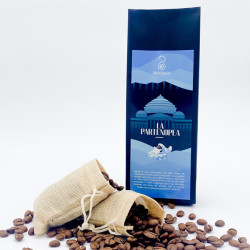 La Partenopea€7.00
- I più venduti macinati
 La Partenopea€7.00
-
Search in blog
Blog categories
Latest posts
The Bicerin and the Historic Coffee Houses of Turin
Read more
Water Is 90% of Your Espresso: Do You Know What You Are Serving? Read more
Hardness, limescale, chlorine and minerals: how water changes the taste of espresso and the life of the machine, and...
Mistakes That Ruin Café Espresso (Even With an Excellent Blend) Read more
Grinder, dose, cleaning, water and service pace: the most common mistakes that ruin café espresso and how to fix them...
Freshly Roasted Coffee: How Many Days Until It Is Ready? Read more
Freshly roasted coffee is not at its best straight away. What resting is, how many days to wait for moka, espresso...
Light, Medium or Dark Roast: What Changes in the Coffee? Read more
Acidity, sweetness, bitterness, body and caffeine: what happens to the bean during roasting and which roast to choose...
Featured posts

Swiss Water, CO₂ or Dichloromethane Decaf: What Changes?
How is caffeine removed from coffee? Water, CO₂ and solvents compared: how they work, what remains in the bean and...
Read more
How to Make Moka Pot Coffee: The Complete Guide
Dose, grind size, water and heat: everything you need for a sweet, aromatic moka pot coffee that never tastes burnt...
Read more
Whole Bean or Ground Coffee: Which Is Better to Buy?
Whole bean or ground? Pros and cons, how long the aroma lasts, when a grinder is worth it and how to choose the right...
Read more
What Is Specialty Coffee and Why Choose It?
Origins, quality, traceability and flavour: discover what specialty coffee means and how to choose your first coffee...
Read more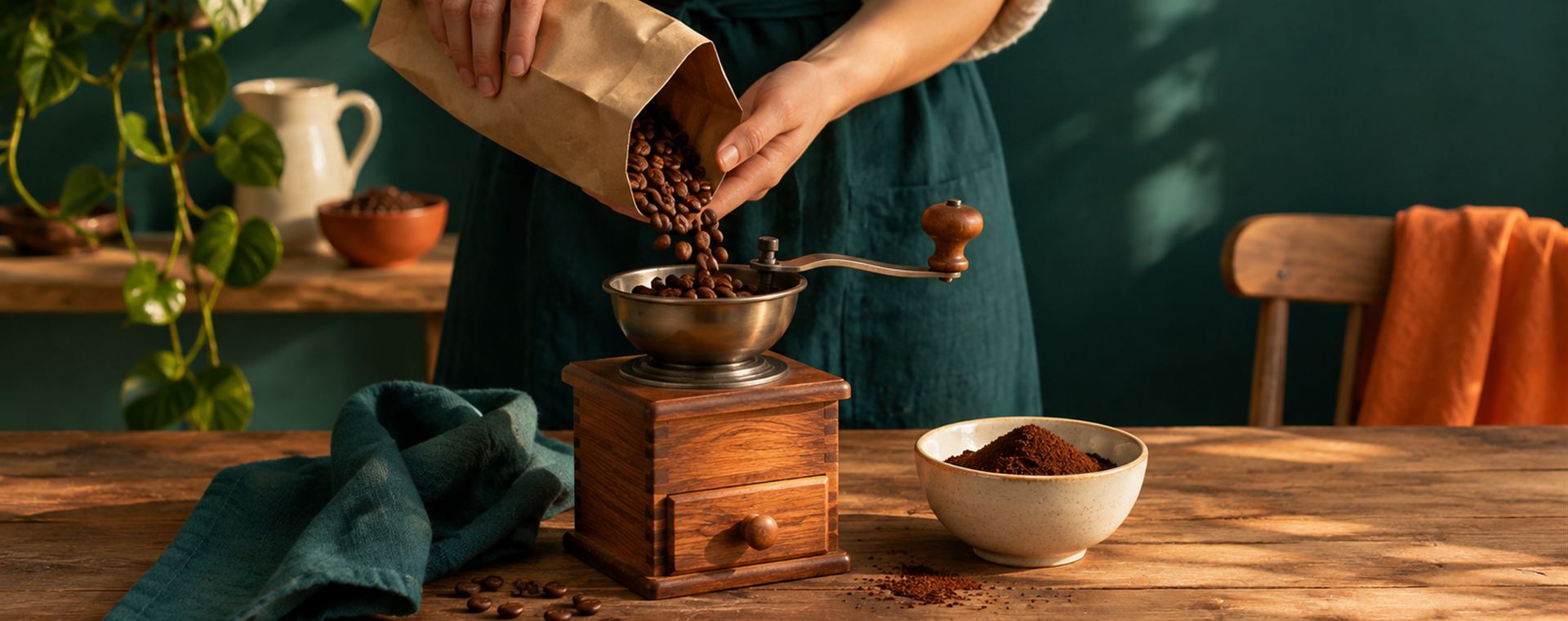
Whole Bean or Ground Coffee: Which Is Better to Buy?
It is one of the first questions people ask when they start buying quality coffee: whole bean or pre-ground? There is no answer that fits everyone. It depends on how you brew, how much you drink and how much time you want to spend. Let's look at the differences, without dogma.
The real difference: freshness
Roasted coffee contains hundreds of aromatic compounds, many of them volatile: they tend to evaporate and oxidise in contact with air. While the bean is whole, its structure protects them. Once you grind it, the surface exposed to air multiplies and aromas start to disperse much faster.
In practice:
- whole bean coffee, once opened and stored well, stays at its best for about 3–4 weeks;
- ground coffee, once opened, for about 1–2 weeks.
You will find all the tips in our article on how to store coffee.
Whole bean: pros and cons
Pros
- Maximum aroma: you grind only what you need, just before brewing.
- You can adjust the grind for every method: moka today, filter tomorrow.
- Coffee lasts longer after opening.
Cons
- You need a grinder, ideally a burr grinder.
- One extra minute every morning.
Ground coffee: pros and cons
Pros
- Ready to use, no extra equipment.
- If it is ground for your method, the result is already excellent.
Cons
- Loses aroma faster after opening.
- The grind is fixed: it suits only one method.
When a grinder is worth it
A grinder is worth it if:
- you drink coffee every day and want the most from it;
- you use several methods (for example moka during the week and V60 at weekends);
- you buy distinctive coffees, such as single origins, and want to taste all their aromas.
A manual burr grinder such as the Comandante C40 grinds evenly and lets you switch grind size in a few clicks. Avoid blade grinders: they break coffee into uneven pieces and make extraction inconsistent. We explain why in our grind size guide.
When ground coffee makes sense
Ground coffee is the right choice if:
- you use only one method, for example always the moka pot;
- you want simplicity;
- you finish a bag within one or two weeks.
The key is choosing coffee ground for your method. Espresso grind is too fine for a moka pot, and filter grind is too coarse for espresso.
| If you use | Choose |
|---|---|
| Moka pot | Ground for moka |
| Espresso machine | Ground for espresso |
| Neapolitan flip pot | Ground for Neapolitan |
| V60, Chemex, filter | Ground for filter |
| Several methods | Whole beans + grinder |
What about bean-to-cup machines?
Machines with a built-in grinder use whole beans. In this case, choose a coffee suited to espresso and make sure the machine's grinder is clean and properly set.
Our approach
That is why Tresessanta coffees are available both as whole beans and ground for moka, espresso, Neapolitan and filter. For example:
- the La Serenissima arabica blend, as whole beans or ground for moka;
- Ethiopia Nensebo Washed ground for moka, for those who want to discover specialty coffee with a home moka pot.
If you are still working out what you like, also read what specialty coffee is.
Frequently asked questions
Can I buy whole bean coffee ground for my moka pot?
Yes: that is why many of our coffees are available ground for moka, espresso, Neapolitan and filter. Simply choose the format that suits your method on the product page.
Is ground coffee cheaper than whole bean?
Generally not: for the same coffee the price is similar. The real difference is how long the aroma lasts after opening, not the cost.
How much coffee does a household use in a month?
Two people each drinking two three-cup moka pots a day use about 60 g of coffee a day, so just under 2 kg a month. At this rate it is better to buy smaller bags more often, so the coffee stays fresh.
Is a manual grinder hard work?
For a moka pot or a cup of filter coffee it takes about 30–60 seconds. For espresso, which needs a finer grind, a little longer. Many people see it as part of their morning ritual.
Are whole beans suitable for a moka pot?
Yes, as long as you grind them medium-fine. Ground too fine, as for espresso, the moka pot risks burning the coffee.
Whole bean or ground for a gift?
If you do not know what grinder the person has, ground for moka is the safest choice in Italy. For an enthusiast who grinds at home, whole beans are more appreciated.
In short
If you want maximum aroma and use several methods, choose whole beans and a good grinder. If you always use the same method and want simplicity, ground coffee is perfectly fine: just make sure it is ground for your method and finished within a couple of weeks.
Posted in: How to Choose Coffee
Related posts
 How to Make Moka Pot Coffee: The Complete Guide
Dose, grind size, water and heat: everything you need for a sweet, aromatic moka pot coffee that never tastes burnt...
Read more Coffee Grind Size: Which One for Moka, Espresso and FilterFine, medium or coarse? The right grind for each brewing method, how to recognise it by touch and why it changes the...
Read more How to Store Coffee and Keep Its AromaJar, fridge or freezer? Where and how to store whole bean and ground coffee, and how long it really stays good after...
Read more