













Coffee, chocolate and cream in a small glass: the story of the Bicerin, Turin's historic coffee houses and the city...
-
- I PIÙ VENDUTI MACINATI
- I PIÙ VENDUTI GRANI
-
- I più venduti i grani

- I più venduti macinati
-
- I più venduti i grani
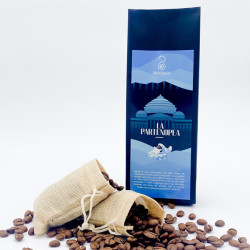 La Partenopea€7.00
- I più venduti macinati
 La Partenopea€7.00
-
Search in blog
Blog categories
Latest posts
The Bicerin and the Historic Coffee Houses of Turin
Read more
Water Is 90% of Your Espresso: Do You Know What You Are Serving? Read more
Hardness, limescale, chlorine and minerals: how water changes the taste of espresso and the life of the machine, and...
Mistakes That Ruin Café Espresso (Even With an Excellent Blend) Read more
Grinder, dose, cleaning, water and service pace: the most common mistakes that ruin café espresso and how to fix them...
Freshly Roasted Coffee: How Many Days Until It Is Ready? Read more
Freshly roasted coffee is not at its best straight away. What resting is, how many days to wait for moka, espresso...
Light, Medium or Dark Roast: What Changes in the Coffee? Read more
Acidity, sweetness, bitterness, body and caffeine: what happens to the bean during roasting and which roast to choose...
Featured posts

Swiss Water, CO₂ or Dichloromethane Decaf: What Changes?
How is caffeine removed from coffee? Water, CO₂ and solvents compared: how they work, what remains in the bean and...
Read more
How to Make Moka Pot Coffee: The Complete Guide
Dose, grind size, water and heat: everything you need for a sweet, aromatic moka pot coffee that never tastes burnt...
Read more
Whole Bean or Ground Coffee: Which Is Better to Buy?
Whole bean or ground? Pros and cons, how long the aroma lasts, when a grinder is worth it and how to choose the right...
Read more
What Is Specialty Coffee and Why Choose It?
Origins, quality, traceability and flavour: discover what specialty coffee means and how to choose your first coffee...
Read more
Swiss Water, CO₂ or Dichloromethane Decaf: What Changes?
Some people drink decaf in the evening, some by choice, some out of necessity. And some avoid it because it "doesn't taste like coffee". Yet a good decaf can be as sweet, aromatic and enjoyable as regular coffee. Much depends on how the caffeine is removed.
How coffee is decaffeinated
Caffeine is removed from green coffee, before roasting. The principle is always the same: the beans are softened with water or steam, and caffeine is extracted with a medium that captures it. What changes is the medium, and with it the result.
By law in Italy, roasted decaffeinated coffee may contain no more than 0.1% caffeine on a dry-matter basis. Regular coffee usually contains between 1% and 2.5%, depending on the species.
Swiss Water: just water
The Swiss Water method was born in Switzerland and is now carried out at a plant in Canada. It uses no chemical solvents: only water, time, temperature and filters.
Here is how it works:
- a first batch of green coffee is soaked in hot water, which absorbs all the soluble compounds of coffee, caffeine included;
- this water passes through carbon filters that capture the caffeine. The result is a liquid rich in coffee compounds but free of caffeine, called Green Coffee Extract;
- the beans to be decaffeinated are soaked in this extract. Because the extract is already saturated with flavour compounds, mainly caffeine leaves the beans, passing into the liquid and then being captured by the filters;
- the cycle repeats until the coffee reaches the required level of decaffeination.
The advantage: no solvent residues and a process designed to preserve the bean's flavour. It is also one of the methods compatible with organic coffee.
Our decaf is a Brazilian arabica processed with the Swiss Water method: you will find it ground for espresso and ground for Neapolitan.
CO₂: pressure
In the carbon dioxide method, CO₂ is brought to high pressure and temperature, into a "supercritical" state in which it behaves partly like a gas and partly like a liquid. In these conditions it selectively attracts caffeine and extracts it from the moistened beans. The caffeine is then separated and the CO₂ reused.
The advantage: it is selective, removing caffeine while limiting the loss of other compounds, and leaves no solvent residues. The limit: it requires expensive plants, so it is mainly used for large volumes.
Solvents: dichloromethane and ethyl acetate
These are the most common and least expensive methods. The beans, softened with steam, are put in contact with a solvent that dissolves caffeine; the solvent is then removed with steam and washing.
- Dichloromethane (methylene chloride): very effective. In the European Union the maximum residue allowed in roasted coffee is 2 mg per kilogram. Roasting at high temperatures helps remove any traces.
- Ethyl acetate: a compound also found in fruit, which is why it is sometimes called "natural decaf". It can leave light fruity notes.
Solvent-decaffeinated coffees are safe when they meet legal limits. Those who prefer to avoid solvents altogether can choose Swiss Water or CO₂.
Quick comparison
| Method | What it uses | Solvent residues | Note |
|---|---|---|---|
| Swiss Water | Water and carbon filters | None | Compatible with organic |
| CO₂ | Supercritical carbon dioxide | None | Selective, expensive plants |
| Dichloromethane | Chemical solvent | Traces within EU limits | Widespread and inexpensive |
| Ethyl acetate | Naturally occurring solvent | Minimal traces | Also called "natural" |
What about taste?
The method matters, but it is not everything. The quality of the green coffee and the roast matter just as much, if not more. A decaf made with good arabica and carefully roasted can be sweet, round and enjoyable. One made with low-quality coffee will stay flat, whatever the method.
A practical tip: decaf has a slightly different structure and tends to extract faster. With espresso, if it runs too quickly, try a slightly finer grind. You will find all the details in our grind size guide.
How much caffeine is left?
Very little. A regular espresso usually contains between 60 and 100 mg of caffeine; a decaf espresso contains only a few milligrams. Anyone who must avoid caffeine entirely for health reasons should still ask their doctor.
Frequently asked questions
Is decaf completely caffeine-free?
No, a minimal amount remains, in the order of a few milligrams per cup. That is why it is called "decaffeinated" rather than "caffeine-free".
Can I drink decaf in the evening?
For most people yes, precisely because residual caffeine is very low. Sensitivity, however, varies from person to person.
Is decaf brewed like regular coffee?
Yes, in a moka pot, espresso machine, Neapolitan pot or filter. It tends to extract a little faster, so espresso may need a slightly finer grind.
How can I tell which method was used to decaffeinate a coffee?
If the method uses no solvents, the producer usually states it on the label, as with Swiss Water or CO₂. If the label says nothing, it is worth asking.
Is decaf stored like regular coffee?
Yes: airtight container, cool and dry place, and use within a few weeks of opening.
In short
Swiss Water uses only water, CO₂ uses pressure, solvents use chemicals within legal limits. If you want a solvent-free decaf with a good flavour profile, the Swiss Water method is an interesting choice: try our Swiss Water decaf.
Posted in: Specialty Coffee: Origins and Processing
Related posts
 What Is Specialty Coffee and Why Choose It?
Origins, quality, traceability and flavour: discover what specialty coffee means and how to choose your first coffee...
Read more Washed, Natural and Honey Coffee: All the DifferencesHow the bean is separated from the fruit changes the taste in the cup. How washed, natural and honey processes work...
Read more