















Coffee, chocolate and cream in a small glass: the story of the Bicerin, Turin's historic coffee houses and the city...

-
- I PIÙ VENDUTI MACINATI
- I PIÙ VENDUTI GRANI
-
- I più venduti i grani

- I più venduti macinati
-
- I più venduti i grani
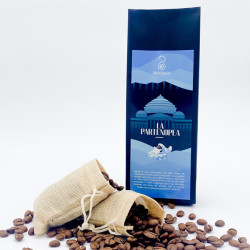 La Partenopea€7.00
- I più venduti macinati
 La Partenopea€7.00
-
Search in blog
Blog categories
Latest posts

The Bicerin and the Historic Coffee Houses of Turin
Read more

Water Is 90% of Your Espresso: Do You Know What You Are Serving? Read more
Hardness, limescale, chlorine and minerals: how water changes the taste of espresso and the life of the machine, and...

Mistakes That Ruin Café Espresso (Even With an Excellent Blend) Read more
Grinder, dose, cleaning, water and service pace: the most common mistakes that ruin café espresso and how to fix them...

Freshly Roasted Coffee: How Many Days Until It Is Ready? Read more
Freshly roasted coffee is not at its best straight away. What resting is, how many days to wait for moka, espresso...
Light, Medium or Dark Roast: What Changes in the Coffee? Read more
Acidity, sweetness, bitterness, body and caffeine: what happens to the bean during roasting and which roast to choose...
Featured posts

Swiss Water, CO₂ or Dichloromethane Decaf: What Changes?
How is caffeine removed from coffee? Water, CO₂ and solvents compared: how they work, what remains in the bean and...
Read more
How to Make Moka Pot Coffee: The Complete Guide
Dose, grind size, water and heat: everything you need for a sweet, aromatic moka pot coffee that never tastes burnt...
Read more
Whole Bean or Ground Coffee: Which Is Better to Buy?
Whole bean or ground? Pros and cons, how long the aroma lasts, when a grinder is worth it and how to choose the right...
Read more
What Is Specialty Coffee and Why Choose It?
Origins, quality, traceability and flavour: discover what specialty coffee means and how to choose your first coffee...
Read more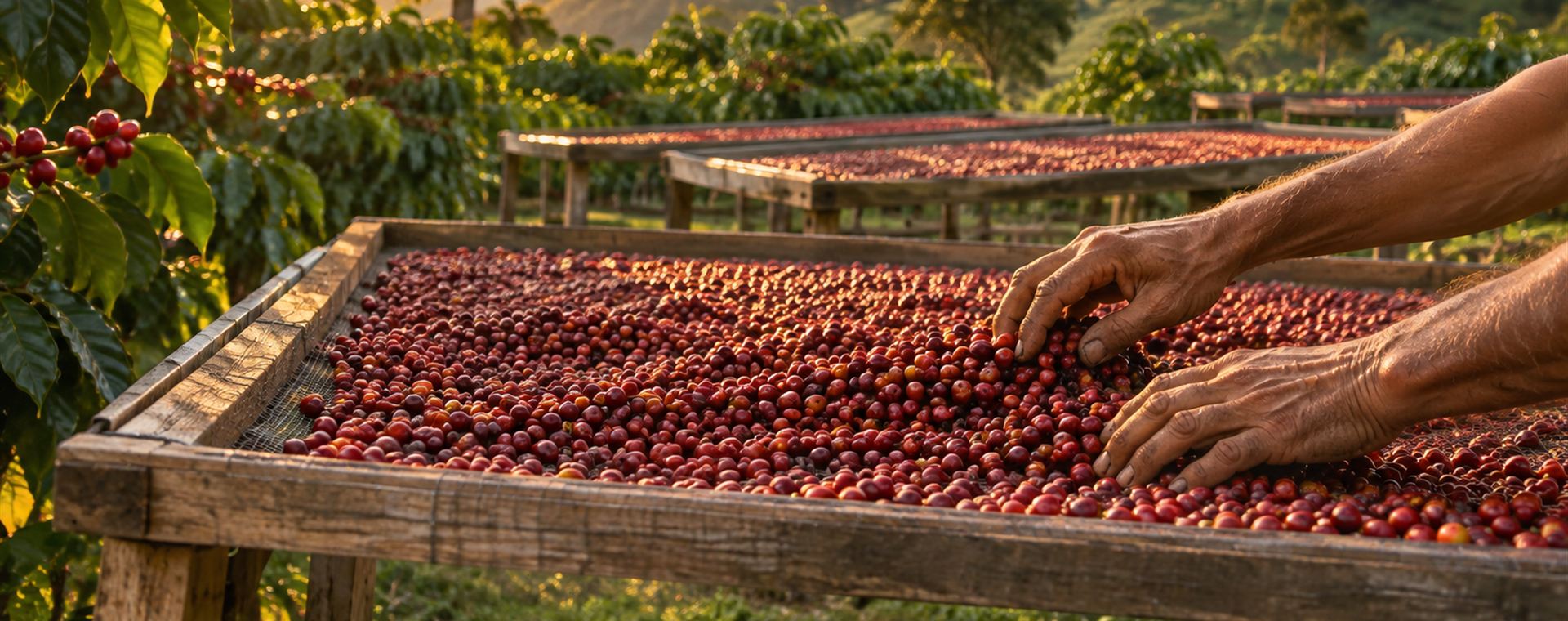
Washed, Natural and Honey Coffee: All the Differences
Coffee does not start as a bean. It starts as a fruit: a small red or yellow cherry with skin, sugary pulp and, at its centre, two seeds. Once dried and roasted, those seeds become the coffee we know.
How the seeds are separated from the fruit is called processing. It is one of the choices that most influence the taste, so much so that the same coffee, grown on the same farm, can have a completely different character depending on how it is processed.
Washed
In the washed process the pulp is removed right after harvest. The beans, still covered by a sugary layer called mucilage, ferment in water tanks for some hours, usually between 12 and 72 depending on climate and producer. They are then washed and dried.
In the cup: clarity, bright acidity, defined aromas. Washed coffees let the variety and terroir speak without the influence of the pulp. This process often brings out floral and citrus notes.
An example: Ethiopia Nensebo Washed, from the Sidamo region. Our Colombia Pink Bourbon is also washed, with a double 32-hour fermentation (16 + 16) and triple washing before sun drying.
Natural
The natural process is the oldest. Whole cherries are spread in the sun, on patios or raised beds, and dried with all their pulp for two to four weeks, turned often. Only at the end is the dried fruit removed.
During drying, the sugars and aromas of the fruit interact with the seed.
In the cup: more body, marked sweetness, notes of ripe fruit and red berries, sometimes winey. A well-made natural is intense and enveloping; a poor one can taste fermented or earthy. That is why it requires great care.
An example: our Ethiopia Nensebo Natural, from the same area as the Nensebo Washed. Tasting them side by side is the best way to understand how much processing matters.
Honey
The honey process sits halfway. Skin and pulp are removed, as in washed coffee, but part of the sugary mucilage stays on the bean during drying. The name comes from the sticky texture of the bean, not from honey.
Depending on how much mucilage remains, producers speak of yellow, red or black honey: the more remains, the closer the result is to a natural.
In the cup: sweetness, round body, softer acidity than washed. A good balance between clarity and intensity.
Quick comparison
| Process | How it works | In the cup |
|---|---|---|
| Washed | Pulp removed, fermented in water, washed | Clean, bright acidity, floral and citrus |
| Natural | Whole cherry dried in the sun | Body, sweetness, ripe fruit |
| Honey | Pulp removed, mucilage left on the bean | Sweet, round, soft acidity |
What about experimental processes?
In recent years many producers have been experimenting with controlled fermentations: anaerobic (in sealed containers without oxygen), with selected yeasts, at controlled temperatures or in barrels that held other products. The results are highly aromatic, unusual coffees, such as our Colombia Barrique Rum Fermentation. They are coffees to explore with curiosity, and they often divide opinion: some love them, others prefer more classic profiles.
How to spot them on the label
On a specialty coffee bag the process is almost always stated: washed, natural (or dry process), honey, anaerobic. If you cannot find it, it is worth asking.
Which to choose?
- Do you like clean, fresh, floral coffees? Start with a washed coffee.
- Looking for sweetness, body and fruit? Try a natural.
- Want something in between? Go for honey.
In a moka pot, naturals tend to give sweeter, fuller cups, while washed coffees show their floral notes best in filter brewing. But it is worth experimenting: surprises are part of the fun. To understand what makes a coffee special, read what specialty coffee is.
Frequently asked questions
Is a natural always sweeter than a washed coffee?
It often has more body and ripe-fruit notes, but it depends on the coffee. A high-altitude washed coffee can be very sweet, and a poorly processed natural can taste flat.
Does fermented mean the coffee has gone bad?
No. Every process includes a controlled fermentation stage, washed included. It is a natural process managed by the producer to develop the coffee's profile. A defect arises only when fermentation gets out of control.
Which process is best for a moka pot?
There is no fixed rule. Naturals often give sweeter, fuller cups that work well in a moka pot; washed coffees can surprise with floral notes, especially with a medium roast.
Why do some coffees have names like "anaerobic" or "thermal shock"?
These are experimental processes in which the producer controls oxygen, temperature or yeasts to obtain more intense profiles. They make very distinctive coffees, worth trying at least once.
Does processing affect caffeine?
Not appreciably. Caffeine depends mainly on species and variety.
In short
Washed means clarity and acidity, natural means body and fruit, honey sits in between. The easiest way to understand it? Taste the same coffee in two different processes, such as Nensebo Washed and Nensebo Natural.
Posted in: Specialty Coffee: Origins and Processing
Related posts
 What Is Specialty Coffee and Why Choose It?
Origins, quality, traceability and flavour: discover what specialty coffee means and how to choose your first coffee...
Read more Swiss Water, CO₂ or Dichloromethane Decaf: What Changes?How is caffeine removed from coffee? Water, CO₂ and solvents compared: how they work, what remains in the bean and...
Read more Light, Medium or Dark Roast: What Changes in the Coffee?Acidity, sweetness, bitterness, body and caffeine: what happens to the bean during roasting and which roast to choose...
Read more