













Coffee, chocolate and cream in a small glass: the story of the Bicerin, Turin's historic coffee houses and the city...
-
- I PIÙ VENDUTI MACINATI
- I PIÙ VENDUTI GRANI
-
- I più venduti i grani

- I più venduti macinati
-
- I più venduti i grani
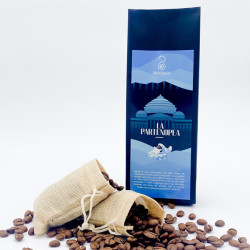 La Partenopea€7.00
- I più venduti macinati
 La Partenopea€7.00
-
Search in blog
Blog categories
Latest posts
The Bicerin and the Historic Coffee Houses of Turin
Read more
Water Is 90% of Your Espresso: Do You Know What You Are Serving? Read more
Hardness, limescale, chlorine and minerals: how water changes the taste of espresso and the life of the machine, and...
Mistakes That Ruin Café Espresso (Even With an Excellent Blend) Read more
Grinder, dose, cleaning, water and service pace: the most common mistakes that ruin café espresso and how to fix them...
Freshly Roasted Coffee: How Many Days Until It Is Ready? Read more
Freshly roasted coffee is not at its best straight away. What resting is, how many days to wait for moka, espresso...
Light, Medium or Dark Roast: What Changes in the Coffee? Read more
Acidity, sweetness, bitterness, body and caffeine: what happens to the bean during roasting and which roast to choose...
Featured posts

Swiss Water, CO₂ or Dichloromethane Decaf: What Changes?
How is caffeine removed from coffee? Water, CO₂ and solvents compared: how they work, what remains in the bean and...
Read more
How to Make Moka Pot Coffee: The Complete Guide
Dose, grind size, water and heat: everything you need for a sweet, aromatic moka pot coffee that never tastes burnt...
Read more
Whole Bean or Ground Coffee: Which Is Better to Buy?
Whole bean or ground? Pros and cons, how long the aroma lasts, when a grinder is worth it and how to choose the right...
Read more
What Is Specialty Coffee and Why Choose It?
Origins, quality, traceability and flavour: discover what specialty coffee means and how to choose your first coffee...
Read more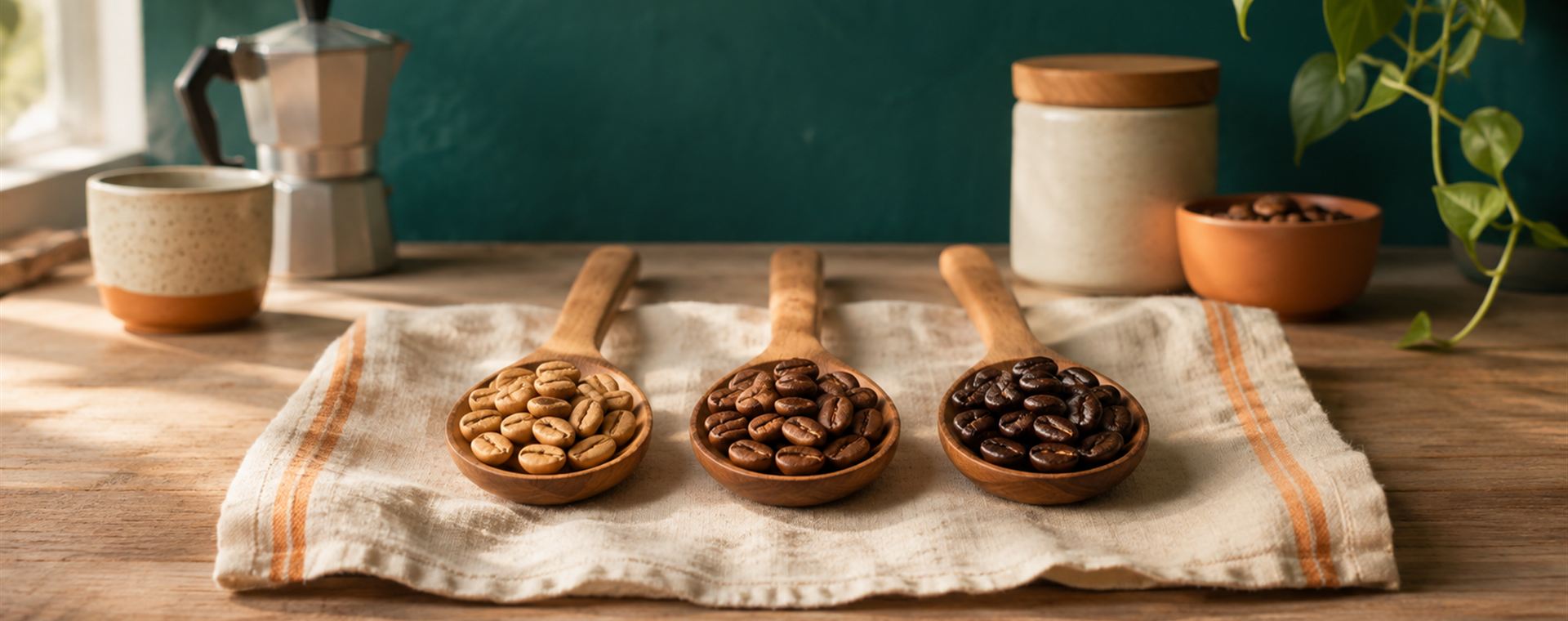
Light, Medium or Dark Roast: What Changes in the Coffee?
Green coffee does not taste like coffee. It is a hard, grey-green seed with a smell reminiscent of grass or beans. Everything we associate with coffee, its aroma, colour and taste, is created during roasting: a few minutes in which the bean changes completely.
That is why the roast level is one of the most useful pieces of information for knowing what to expect in the cup.
What happens during roasting
In a roaster, coffee is heated for usually 9 to 15 minutes, depending on the coffee and the desired result. There are three main stages:
- Drying. The bean loses moisture and turns from green to yellow, with a smell like bread.
- Browning. Sugars and proteins react and hundreds of aromatic compounds form. The bean turns brown.
- Development. At around 200 °C the bean expands with a cracking sound called first crack. From here the roaster decides when to stop: a few seconds more or less change the result.
The further roasting goes, the more sugars caramelise and then break down, and the more origin notes give way to roast notes.
Light roast
The coffee is stopped shortly after first crack. The bean is light brown with a dry surface.
In the cup: bright acidity, floral and fruity notes, light body. This roast lets the origin speak most.
Best for: filter, V60, Chemex. In a moka pot or espresso it may taste sharp to those used to traditional coffee.
Medium roast
The coffee is developed a little longer after first crack. The colour is a full brown.
In the cup: balance between acidity and sweetness, notes of caramel, nuts and milk chocolate, medium body.
Best for: virtually every method. It is often the best choice for approaching specialty coffee with a moka pot.
Dark roast
Roasting goes up to or beyond second crack. The bean is very dark and the surface turns shiny as oils rise.
In the cup: marked bitterness, notes of dark cocoa and toast, full body, almost no acidity. Origin characteristics become hard to recognise.
Best for: those who love traditional "strong" coffee, especially espresso with milk.
Quick comparison
| Roast | Light | Medium | Dark |
|---|---|---|---|
| Acidity | High | Medium | Low |
| Sweetness | Fruity | Caramelised | Bitter |
| Body | Light | Medium | Full |
| Typical notes | Flowers, citrus, fruit | Caramel, nuts, chocolate | Dark cocoa, toast |
| Methods | Filter | All | Espresso, moka |
A myth: caffeine
Many people think a dark roast contains more caffeine because it "tastes stronger". In fact the amount of caffeine changes very little with roasting. Differences depend far more on the species (robusta contains about twice as much as arabica) and on the dose used.
Why specialty coffee is roasted lighter
If a coffee has distinctive floral, fruity or sweet notes, a dark roast would cover them. That is why specialty coffees are often roasted lighter than commercial coffee: the aim is to bring out the coffee, not mask it. More in what specialty coffee is.
At Tresessanta we roast in Turin, and some coffees are available in two roasts: one for espresso and moka, one for filter. You will find it on the product page under "Roasted for".
Which to choose
- Do you use a moka pot and love a classic taste? A medium roast, like a good Brazilian: try Brazil Vila Boa.
- Want to discover the floral side of specialty coffee with filter? A lighter roast of a washed Ethiopian, such as Nensebo Washed.
- Do you make espresso and want balance? An arabica blend such as La Serenissima.
Frequently asked questions
Is dark roast coffee "stronger"?
It tastes more intense and bitter, but it does not contain more caffeine. The feeling of strength comes from roasty notes and body.
Why are some beans shiny and others matte?
Shiny beans have oils on the surface, typical of dark roasts. A matte bean usually indicates a light or medium roast.
Can I tell the roast from the colour of ground coffee?
Partly: the darker it is, the further the roast. But colour also depends on the coffee, so the label remains more reliable.
Is a light roast suitable for a moka pot?
It can be, but it may taste sharp. If you want to try a light coffee in a moka pot, use a medium-fine grind and low heat, and compare it with a medium roast.
Who decides the roast level?
The roaster, after testing the coffee with several profiles and tasting it. The goal is to find the point where the coffee best expresses its character for its intended brewing method.
In short
Light means acidity and origin, medium means balance, dark means bitterness and body. There is no single best roast: there is the one that best suits your coffee, your method and your taste.
Posted in: Coffee Roasting and Tresessanta
Related posts
 What Is Specialty Coffee and Why Choose It?
Origins, quality, traceability and flavour: discover what specialty coffee means and how to choose your first coffee...
Read more Washed, Natural and Honey Coffee: All the DifferencesHow the bean is separated from the fruit changes the taste in the cup. How washed, natural and honey processes work...
Read more Freshly Roasted Coffee: How Many Days Until It Is Ready?Freshly roasted coffee is not at its best straight away. What resting is, how many days to wait for moka, espresso...
Read more